To live for as long
as we want.
Medicine edges closer, decade by decade, to treating aging itself. For those who won't make it in time, cryonics offers a pause — a bridge to that future.
Follow us on Instagram
A pause, not an ending.
Cryonics is an attempt to preserve a person at the moment of their legal death, in the hope that future medicine will be able to repair what today's medicine cannot cure.
When someone is declared legally dead — based on what today's medicine is able to do — their tissues, including the brain's, still retain much of their structure. Cryonics preserves that structure at extremely low temperatures, halting decomposition for as long as it takes.
Today the process isn't "freezing" — it's vitrification. The body — or, in some cases, just the brain — is cooled until it becomes a glass-like solid, avoiding the ice crystals that would otherwise damage tissue. It's then stored at −196 ºC in liquid nitrogen, a temperature at which biological processes essentially stop. There, it can wait for decades, or centuries.
We call a person in this state a cryopreserved patient, not "dead" in the final sense. The word matters: it describes a condition that, for the first time in history, might not be irreversible.
Medicine is accelerating.
We're aging at the same old pace.
Every year, life expectancy rises. Every decade, medicine learns to treat diseases that used to be fatal. Advances in genetics, cellular reprogramming, and regeneration are accelerating.
There's an idea called longevity escape velocity: the point at which medicine advances faster than we age — where every year we live, science gives us back more than a year of healthy life in return. It isn't science fiction — it's a reasonable extrapolation of the current pace of discovery.
The question is no longer whether we'll reach that threshold, but when. For those who get there in time, old age and death will stop being inevitable. For those who don't — because of illness, accident, or simply being born too soon — cryonics is plan B. A way to wait until medicine catches up to what it can't cure today.
A team at the University of Erlangen–Nuremberg published the first study in PNAS showing vitrified mouse hippocampal tissue slices (~350 µm), stored in liquid nitrogen and then rewarmed with their neurons still active — including the cellular mechanisms behind long-term memory. The authors themselves note that vitrification and rewarming still need to improve before this applies to whole organs, and outside experts point out that preserving an entire human brain remains a distant goal. But that distance shrinks a little more each year.
German, A. et al. · Proc. Natl. Acad. Sci. USA 123, e2516848123 (2026)Five steps, a window of hours.
Cryopreservation is a precise sequence of interventions designed to preserve cellular structure — especially in the brain — with as little damage as possible. The window for action is narrow: ideally, the cryonics team is already present at the moment of legal death. What follows is a general outline of the standard process; technical details vary by institution.
Legal declaration of death
A physician certifies legal death according to current criteria. The cryonics team, ideally already on site, begins interventions immediately.
Stabilization
Circulation is restored using mechanical CPR, and anticoagulant and neuroprotective medications are administered. At the same time, rapid cooling with ice begins. The goal is to minimize ischemic damage to the brain during the transition.
Cryoprotectant perfusion
The patient's blood is replaced with a vitrification solution — a precise mixture of cryoprotectants such as DMSO, ethylene glycol, and sucrose. This solution displaces water from the cells and prevents ice crystals from forming during the cooling that follows.
Controlled cooling
The patient is cooled gradually, passing through the glass transition temperature — around −124 °C — without the tissue crystallizing. Cooling continues until it reaches the temperature of liquid nitrogen.
Long-term storage
The patient is stored head-down in a vacuum-insulated container immersed in liquid nitrogen. At that temperature, biological processes essentially stop. Maintenance is minimal — it's just a matter of topping off the nitrogen that naturally evaporates.
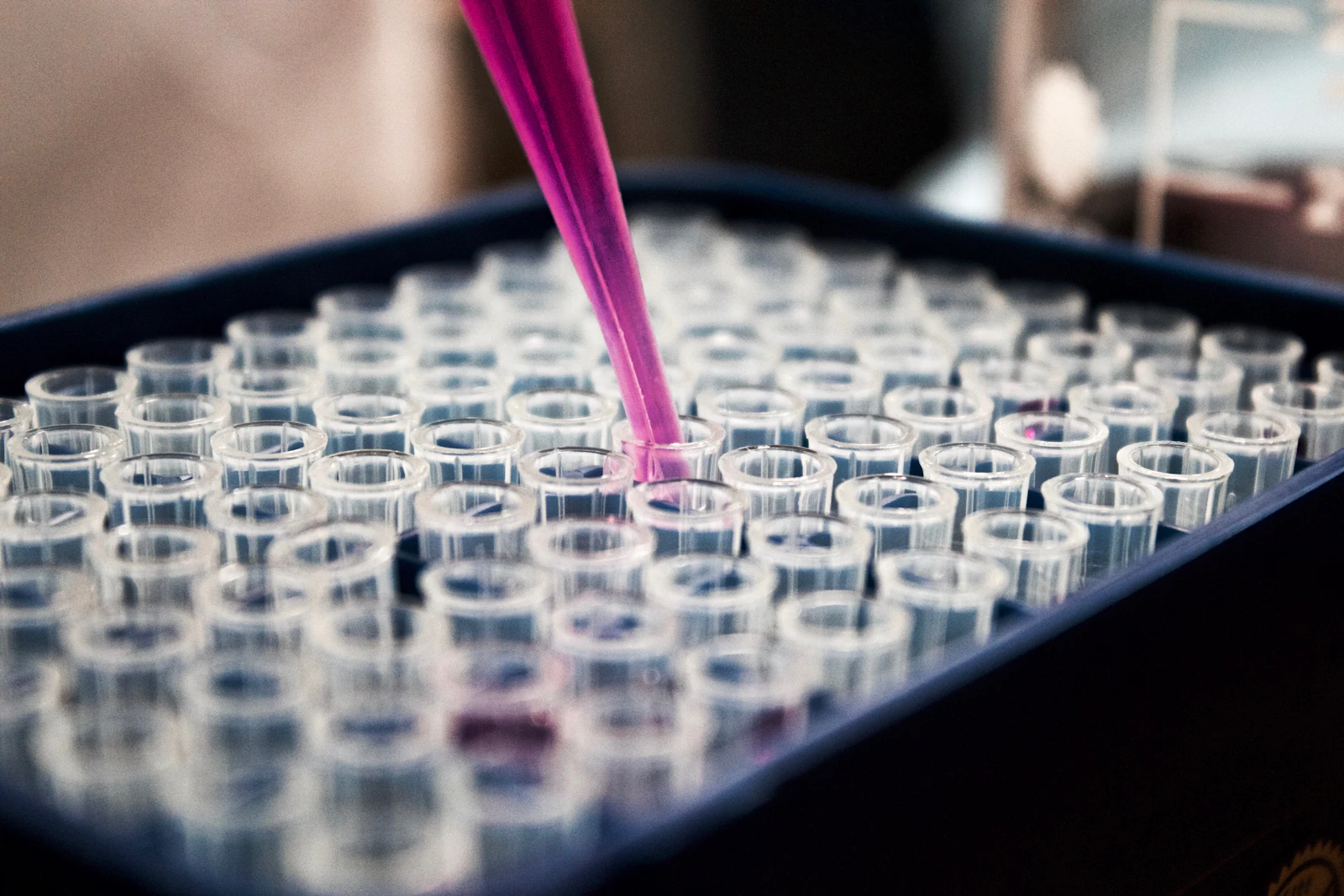
Some institutions offer the option of preserving only the brain — neuropreservation — based on the idea that identity resides there. It lowers costs, but it's as much a philosophical decision as a practical one.
Vitrification solutions are toxic at room temperature, but not at −196 °C. The damage they cause is one of the problems future medicine will need to reverse at the time of revival.
Cryonics organizations don't use the word "corpse." They use "patient." It isn't a euphemism — it's the intellectual position that the outcome hasn't been written yet.
Legally, no — at least not yet. It's only performed after legal death has been declared. But that's less limiting than it sounds: at the moment of legal death, most of a person's tissues are still alive at the cellular level.
"Legal death" is really just the point at which today's medicine admits it can't go any further. Plenty of people alive today were revived from what, fifty years ago, would have been considered irreversible death. Cryonics tries to carry patients — preserved at that moment — forward to future doctors who haven't given up yet.
We don't know for certain. What we do know is that the evidence points in the right direction:
Cryopreserved human embryos have grown into healthy children. Many tissues — including brain tissue — have been preserved and reactivated. Rabbit kidneys have been vitrified, rewarmed, and transplanted with full viability. In March 2026, vitrified mouse brain tissue showed, for the first time, neuronal activity and long-term memory after being rewarmed.
No whole mammal has yet been cryopreserved at cryogenic temperatures and successfully revived. But the trend is clear, and the damage current cryopreservation causes is, according to published analyses, limited and — in principle — repairable by future medicine.
No more than space travel, organ transplants, or gene editing were before they became possible. Cryonics rests on technologies that already exist today — vitrification, nanomedicine, cellular reprogramming — and projects what those technologies will be able to do once they mature.
As Robert Freitas, author of Nanomedicine, put it: "I wouldn't be surprised if the first attempt at cryonic revival happens between 2040 and 2050." No one can predict exact dates. But the bet isn't on a miracle — it's on the known pace at which science advances.
Yes. There's an Open Letter on Cryonics signed by more than 60 scientists, including well-known neuroscientists and biologists, stating that cryonics is "a legitimate scientific endeavor."
There are also technical papers in journals like the Annals of the New York Academy of Sciences (Lemler, 2004) and Rejuvenation Research (Best, 2008), in addition to the 2026 Erlangen–Nuremberg study in PNAS. What's telling is the reverse: as Dr. Ralph Merkle has pointed out, there isn't a single published technical paper arguing that cryonics can't work.
Not in the religious or magical sense. Cryonics can't recover someone whose brain has been destroyed or cremated. What it claims is more modest: if a person is preserved immediately, with as little damage as possible, their brain structure might be enough for future medicine to restore them.
Thousands of people are resuscitated every year in hospitals, with no heartbeat and no breathing. The definition of "death" is the permanent cessation of vital functions. If someone, even after cryopreservation, were ever to recover, that would mean they were never "truly" dead in the first place.
Not yet. Active cryopreservation facilities are located in the United States (Alcor, Cryonics Institute, Oregon Cryonics), Germany (Tomorrow Bio), Russia (KrioRus), and Australia (Southern Cryonics).
People in Spanish-speaking countries who want to be cryopreserved today sign contracts directly with one of these institutions — typically Cryonics Institute or Tomorrow Bio, which are the most affordable. Local support groups exist, like ours in Argentina, working on the coordination needed to get a patient preserved and to their destination.
Neuronal activity restored in vitrified mouse hippocampal tissue
For the first time, vitrified mouse hippocampal tissue slices (~350 µm), preserved in liquid nitrogen, retain neuronal excitability and long-term memory mechanisms after being rewarmed.
Read more →FDA clears the first human trial of epigenetic reprogramming
Life Biosciences, co-founded by David Sinclair, received FDA clearance to begin the first human clinical trial of a therapy designed to reverse cellular aging. The first patient was dosed in June 2026.
Read more →Sinclair in Dubai: "Aging could be reversible"
The Harvard geneticist states that within the next one to two decades, healthcare systems could be transformed to treat aging as a reversible medical condition.
Read more →An Argentine group, not for profit.
We're a group of Argentines interested in cryonics, science, and life extension. We're a nonprofit. We work to spread the word about cryonics across the Spanish-speaking world, and to help make it a real option in the region someday.
We believe cryonics should be accessible to anyone who wants it, regardless of their financial situation. That's what drives us — both in what we do today and in what we're trying to build for the future.

Want to know more?
If you're curious about cryonics, want to learn more, join the group, or just have questions — message us on Instagram or by email. We reply thoughtfully, and never in a rush.